Start with the habits that matter most
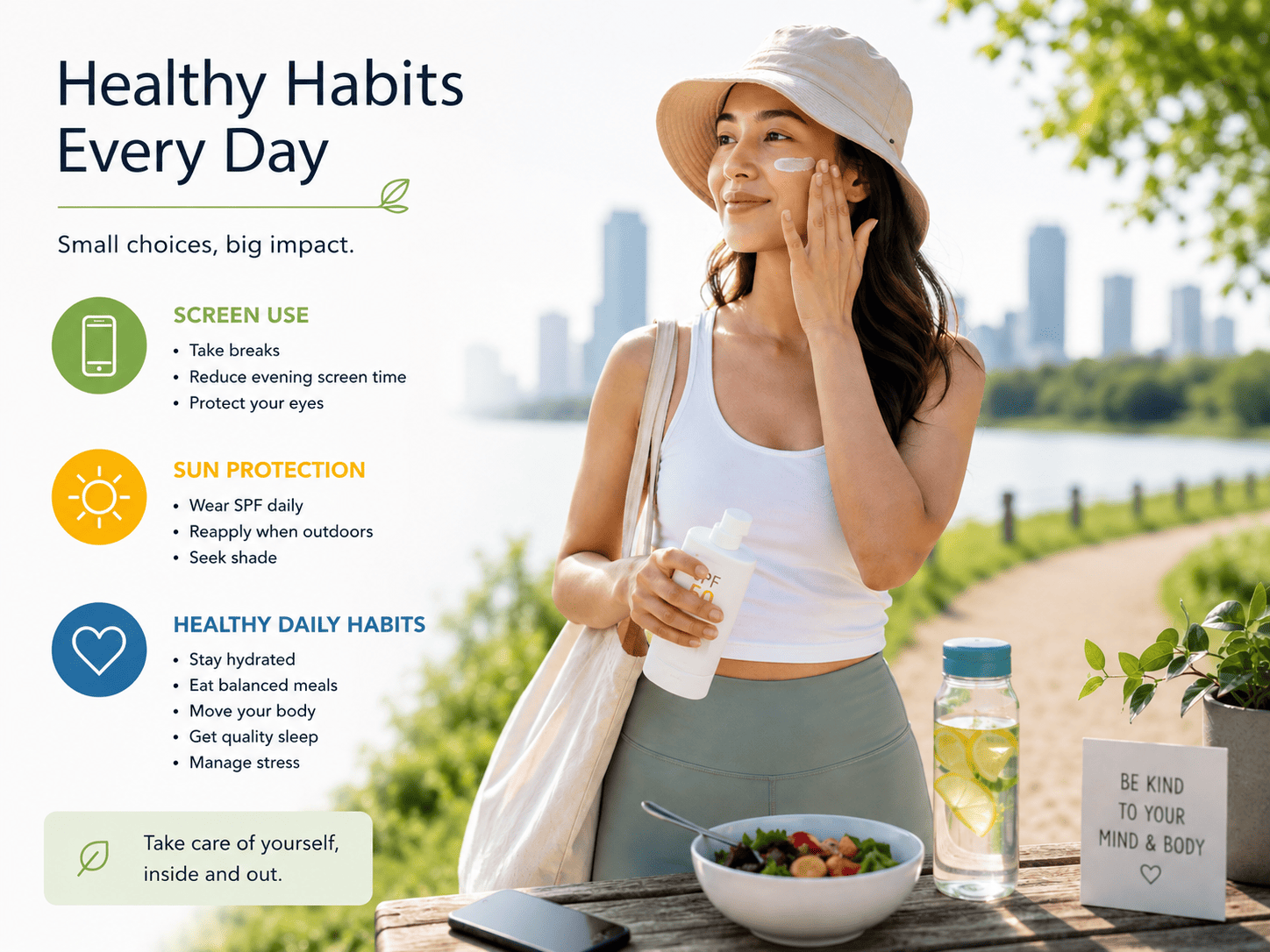
The most useful eye-care habits are simple. Wear sunglasses outdoors, take breaks when you spend long hours on screens, avoid smoking, and keep up with regular eye exams. These are not flashy steps, but they cover the basics that protect long-term vision.
- Use sunglasses that block UV rays when you are outside in strong daylight.
- Take screen breaks often enough that your eyes do not stay locked at one distance all day.
- Do not wait for obvious pain before paying attention to eye strain or dryness.
Do not skip regular eye checks
One reason eye exams matter is that many vision problems do not feel dramatic in the beginning. You can still be functioning normally while pressure, retinal changes, or other issues are developing quietly.
That is why routine exams are about more than updating glasses. They give you a chance to catch issues before they become harder to manage.
Daily health also affects your vision
Eye health is tied to the rest of the body. Nutrition, blood sugar control, sleep quality, and smoking habits all influence long-term visual health. If you only think about the eyes in isolation, you miss part of the picture.
- Eat in a way that supports overall metabolic health.
- Manage blood sugar carefully if you are at risk of diabetes or already diagnosed.
- Sleep enough that your eyes get time to recover from constant visual work.
Protective eyewear is not just for industrial work
Eye injury risk is easy to underestimate during home repairs, cleaning with chemicals, gardening, or sports. The problem is not only sharp trauma. It can also be dust, splash exposure, or small flying particles.
If a task creates even a moderate chance of debris or chemical exposure, proper protective eyewear is the better default.
Source and further reading
This article is original writing based on guidance from the National Eye Institute’s “Keep Your Eyes Healthy” page.